
The Book is Here.
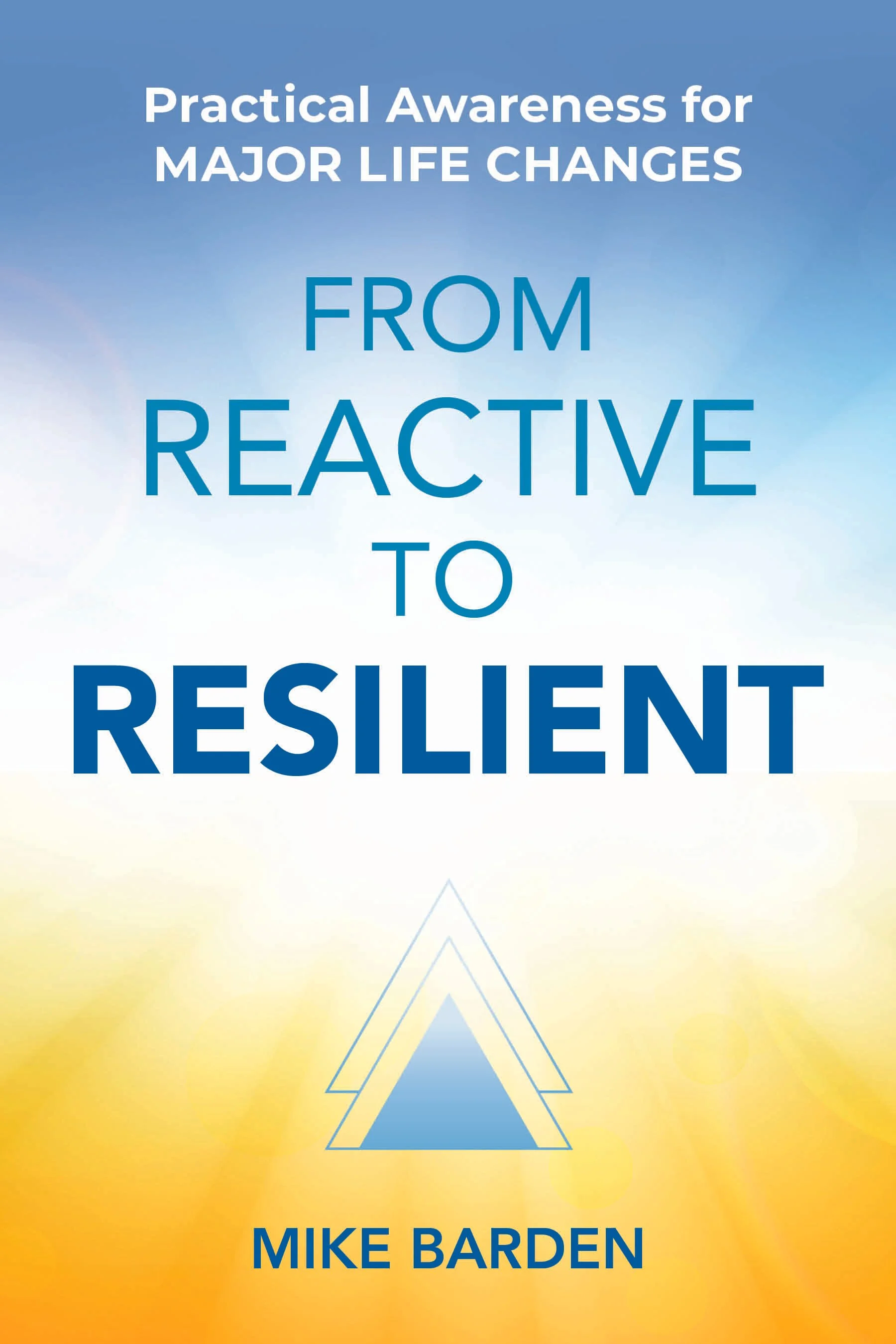
From Reactive to Resilient: Practical Awareness for Major Life Changes is now available.
15 chapters. 184 research citations. The complete C.A.L.M. Method. A 30-day action plan. Real crisis resources — not platitudes.
For anyone navigating divorce, job loss, belief change, or any moment when your old identity no longer fits.
No credit card required • Instant delivery
Available Now
Latest Insights:



I'm Mike Barden. I teach the C.A.L.M. Method for identity crisis.
If your career just vanished, a relationship ended, or your beliefs crumbled, you might be asking this question right now. Major life transitions don't just change your circumstances—they shake your sense of who you are.
You're not broken. You're experiencing what happens when you outgrow the roles and identities you've been trying to squeeze into.
Through my own experience with job loss, divorce, and the collapse of familiar belief systems, I discovered something that changed everything: much of what I thought was "me" came from inherited patterns I never consciously chose.
Beneath those borrowed identities is something more stable—your capacity for awareness itself.
The C.A.L.M. Method
People who navigate major transitions well aren't necessarily stronger. They've learned to distinguish between automatic reactions and conscious responses. Between inherited conditioning and authentic choice.
My book "From Reactive to Resilient: Practical Awareness for Major Life Changes" teaches the C.A.L.M. Method—a four-step framework for maintaining stability when everything feels uncertain:
C - Connect with what's happening in and around you Pause and notice your experience right now—your body, breath, thoughts, and the world around you.
A - Allow the things that are to be as they are Let yourself experience this moment without labeling it good or bad. Acceptance means acknowledging reality so you can respond with awareness.
L - Let Go of your running commentary about the situation Notice when your mind clings to how things "should" be. Gently release unhelpful attachments.
M - Move Forward to take action informed by the present moment Take your next step from mindful awareness, not from habit or reactivity.
These four steps are introduced briefly here—download the free C.A.L.M. Method Quick-Start Guide for the complete framework with detailed guidance.
This isn't meditation instruction or abstract philosophy. It's practical awareness techniques for career transitions, relationship endings, belief shifts, or any major change that leaves you questioning who you are.
Backed by 184 research endnotes. Edited by Cathy Suter, who has edited Jon Kabat-Zinn's work.
Order Now
Get Started
→ Download the free C.A.L.M. Method Quick-Start Guide
Get the C.A.L.M. Method framework overview, self-assessment quiz, grounding practices, and crisis resources for identity transitions.
Get the Guide →
→ Watch the C.A.L.M. Method video series on YouTube
Free weekly videos breaking down each step of the framework
Subscribe here →
→ Read articles on identity crisis and life transitions
In-depth guidance on navigating major life changes
Browse articles →
→ Join the email list
Get free practices, insights, and updates on new content
Sign up →
Watch the C.A.L.M. Method in Action
The C.A.L.M. Method: Connect, Allow, Let Go, Move Forward
Reactive vs Responsive: How to Apply C.A.L.M. in 3 Real Identity Crisis Situations
How to Respond vs React: The "How's Your Ex?" Example
More videos on identity, resilience, and navigating major life changes. Subscribe on YouTube →

About Mike:
I'm a Wisconsin-based writer who developed these approaches while navigating divorce, job loss, and community dissolution. My work combines lived experience with psychological research, written for people who want real tools—not platitudes or quick fixes.
When your mind won't stop spinning with catastrophic thoughts about who you are and what happens next, you need more than positive thinking. This guide teaches the CONNECT grounding technique—a present moment awareness practice that stops overthinking by anchoring you in direct sensory experience. Not as a quick fix, but as a skill you can return to again and again during divorce, job loss, midlife crisis, or any major life transition where you've lost your sense of self.